January 20, 2025
BuddhismQ&A
Drums and Hand Drums
Drums are used when priests enter the main hall of the temple for a service and hand drums are used when the sacred title of the Lotus Sutra “Namu Myoho Renge Kyo” is chanted. Large drums on stands are often placed in the main halls of temples. The uchiwa daiko hand drums are individually used to keep the rhythm when chanting the Odaimoku. Besides that, drums were used for the signal of a meal, the time, and so on. The purpose of hitting a drum is to announce something to everyone.
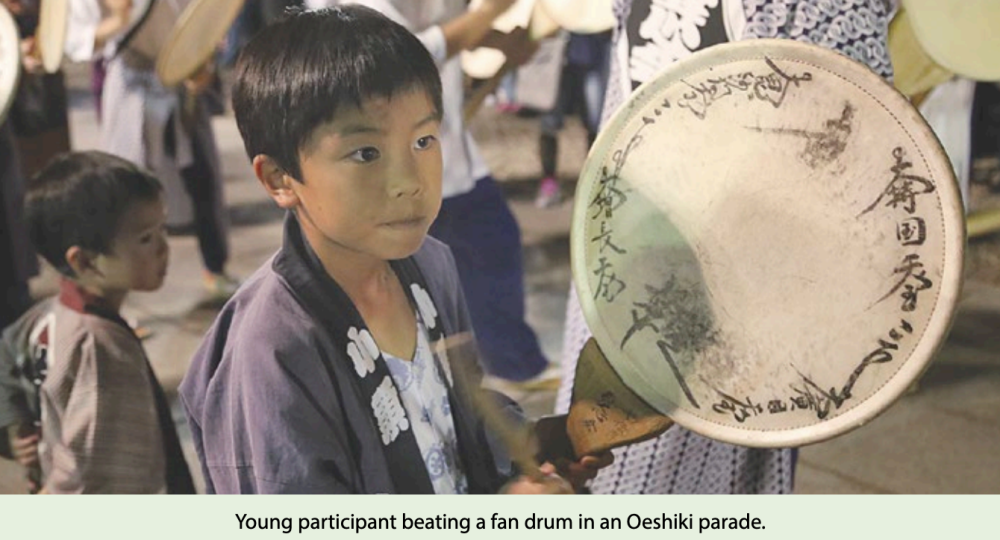
In Chapter 12 of the Lotus Sutra, “Devadatta,” it says, “Beating a drum, I proclaimed to the four directions that I was seeking the Dharma.” And that purpose is to hold the service and honor the Buddha with music and rhythm. In Chapter 7, “The Apparitional City,” it says, “The devas of the four quarters constantly struck heavenly drums to honor the Buddha, and in the same way all the other devas made divine music for a full ten intermediate kalpas until the Buddha’s nirvana.” In Chapter 16, “The Lifespan of the Buddha,” it says, “The devas beat heavenly drums making constant and varied music.” The purpose of beating drums during a service is to offer music and rhythm to the Buddha. Beating the drum is not just for keeping time.
People close enough to hear the sound of beating drums can understand the sermon of the Lotus Sutra as well. Today, the practice of Odaimoku can be spread to many people if drums are being used during services.
There are two different kinds of hand drums; one is a double-sided drum, and the other is single-sided, which is lighter to carry around and beat. It isn’t altogether clear as to when Nichiren Shu started using these hand drums, but there are references to drums being beaten at a memorial service during the Bunei Era (1264-75).
We are welcoming questions about Buddhism from our readers. Please send your questions by e-mail to editor-nichirenshunews@nichiren.or.jp or contact us through your local temple.