February 14, 2025
Interview with a Kokusai Fukyoshi(1)
Rev.Myoan Katayama

Below, we asked Reverend Katayama various questions about her life and activities in India. She shared valuable insights about cross-cultural exchange through Buddhism between India and Japan.

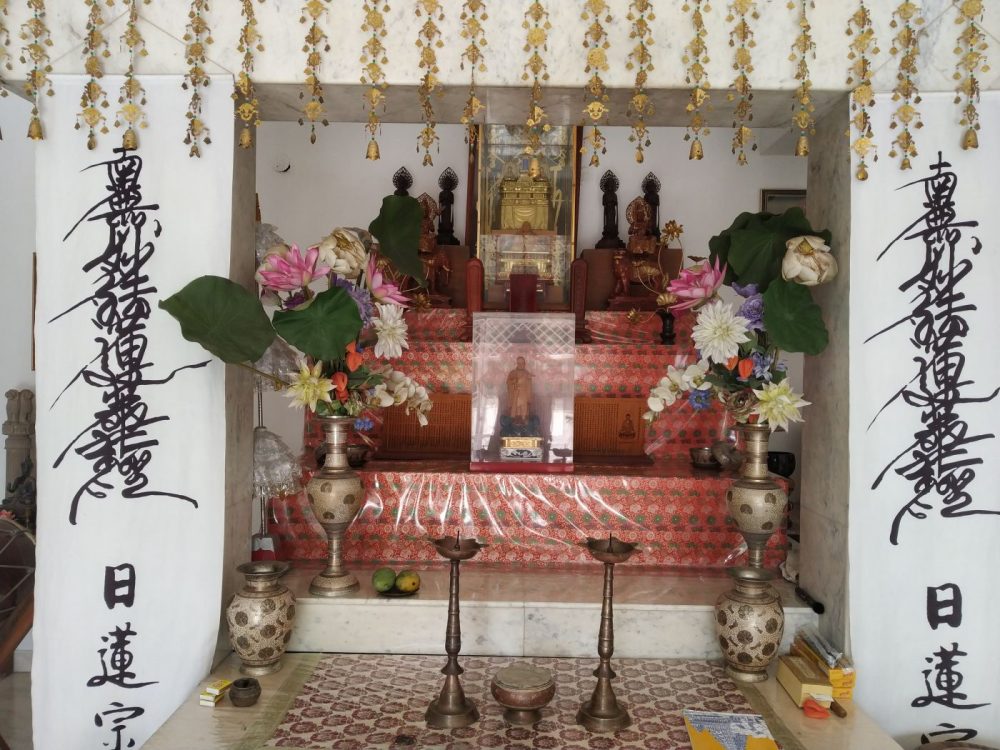
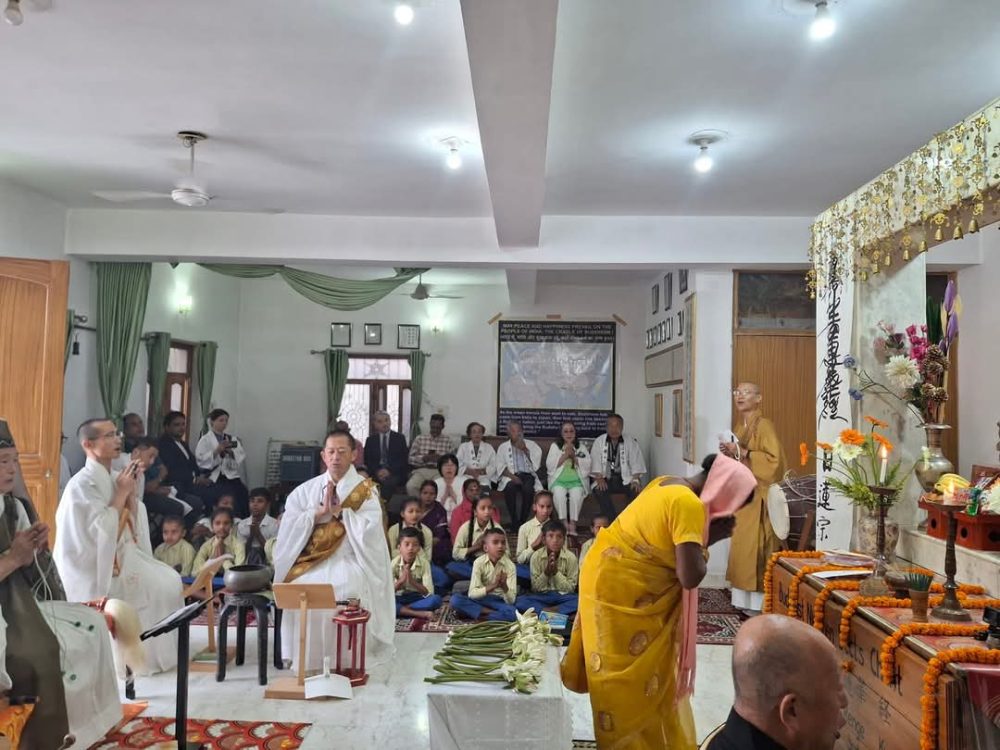
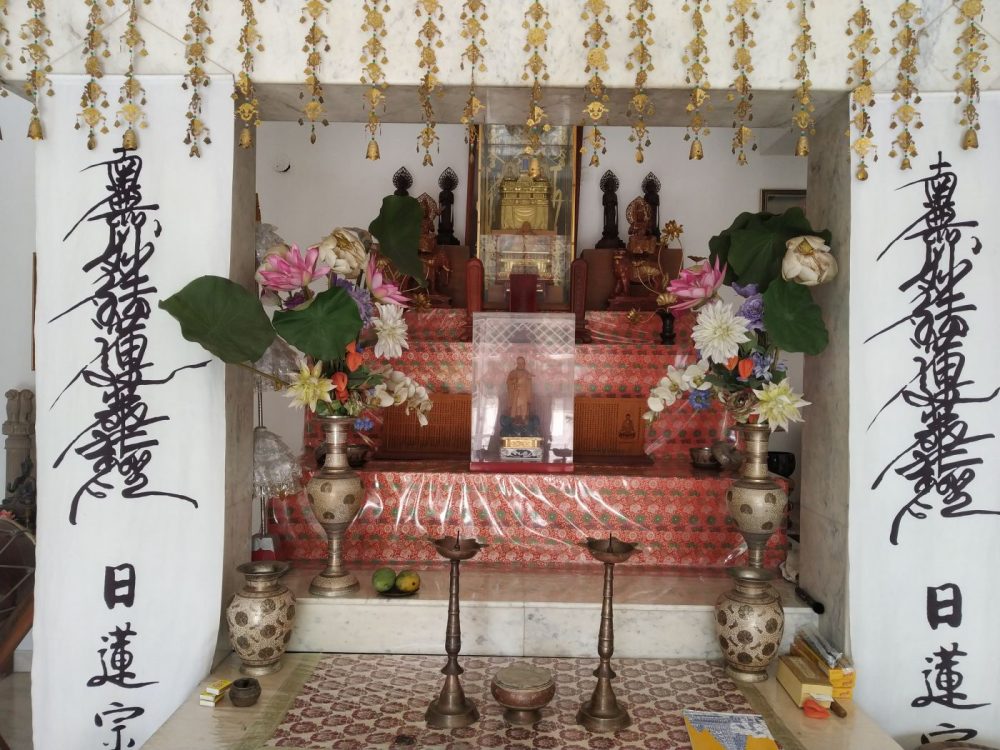
Reverend Myoan Katayama is a Nichiren Buddhist priest stationed at the Isshin-ji Temple branch in Bodh Gaya, India. Since 2015, she has been engaged in missionary work in Bodh Gaya, the sacred site of Buddha’s enlightenment, practicing Buddhist propagation deeply rooted in the local community. Her activities include weekly food distribution serving over 120 people, regular Buddhist ceremonies, and Lotus Sutra study sessions in Delhi, working closely with local residents. The Isshin-ji Temple branch, as the only Nichiren Buddhist temple in Bodh Gaya, serves as a bridge between Japanese and Indian Buddhist cultures. While respecting local customs and traditions, she continues her missionary work together with the practice of chanting the Odaimoku (Nam-myoho-renge-kyo). She dedicates herself daily to spreading the teachings of the Lotus Sutra in India.
Questions

Questions about your upbringing and childhood
Q1. Please tell us about the people and events that influenced you during your childhood.
A. I grew up watching my aunt and grandmother perform the morning and evening Buddhist services and recite the Lotus Sutra in front of the family altar every day. Although I come from a lay family, I was blessed with relatives who were very devout.
Q2. What kind of family did you grow up in? How was Buddhism valued in your family?
A. My parents were also parishioners of the temple where my teacher was a priest, and we would all go to the temple at night to pray to the Lotus Sutra. When we bought sweets or fruit, it was customary to first offer them to the family altar, and then we would eat them ourselves.

Q3. What were your favorite games or hobbies when you were a child?
A. I liked my calligraphy teacher, and I went to calligraphy classes for over 10 years, so my hobby is calligraphy.
Q4. What kind of education did you receive growing up? Were there any teachers or instructors who made a particular impression on you?
A. I grew up during the compulsory education period, and I didn’t receive any special education, but I liked the moral and ethics classes. There were a lot of passionate teachers who cared about their students.
Q5. How did your values and goals change from childhood to adolescence?
A. When I was a child, I was happy to get good grades and make my parents happy, but gradually I started to set goals for myself, such as wanting to become a person who is useful to others.

Q. Questions about your encounter with Buddhism
Q6. What was the reason you encountered Buddhism?
A. I was brought up in an environment where my relatives attended the temple of my teacher as Temple members, so I was taken to the temple from when I was a baby, and my teacher’s Dharma talks were my encounter with Buddhism.
Q7. Please tell us about a special episode that left a deep impression on you about Buddhist teachings.
A. I was impressed by the fact that Buddhism has both a rational approach to the law of cause and effect and a compassionate approach to salvation that transcends the cycle of rebirth.
Q8. Please tell us about any difficulties you faced in choosing the path of a priest and your family’s reaction.
A. Although I come from a lay family, I was brought up in an environment that was closely connected with Buddhism, so there were no negative aspects.
Q9. What kind of training and study did you have to do to become a priest?
A. I mostly remember being blessed with good opportunities.
Q10. What was the most important lesson you learned through that training?
A. I was taught to “act with your heart, not with your form”.
Q Questions about recent activities
Q11. What achievement are you particularly proud of from your activities so far?
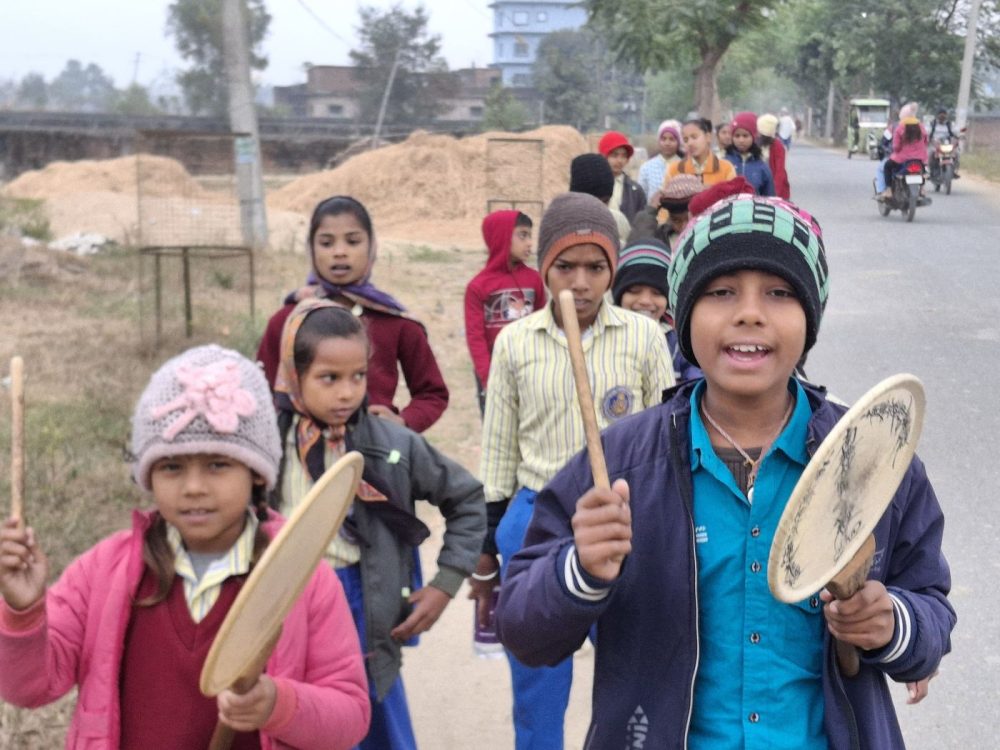
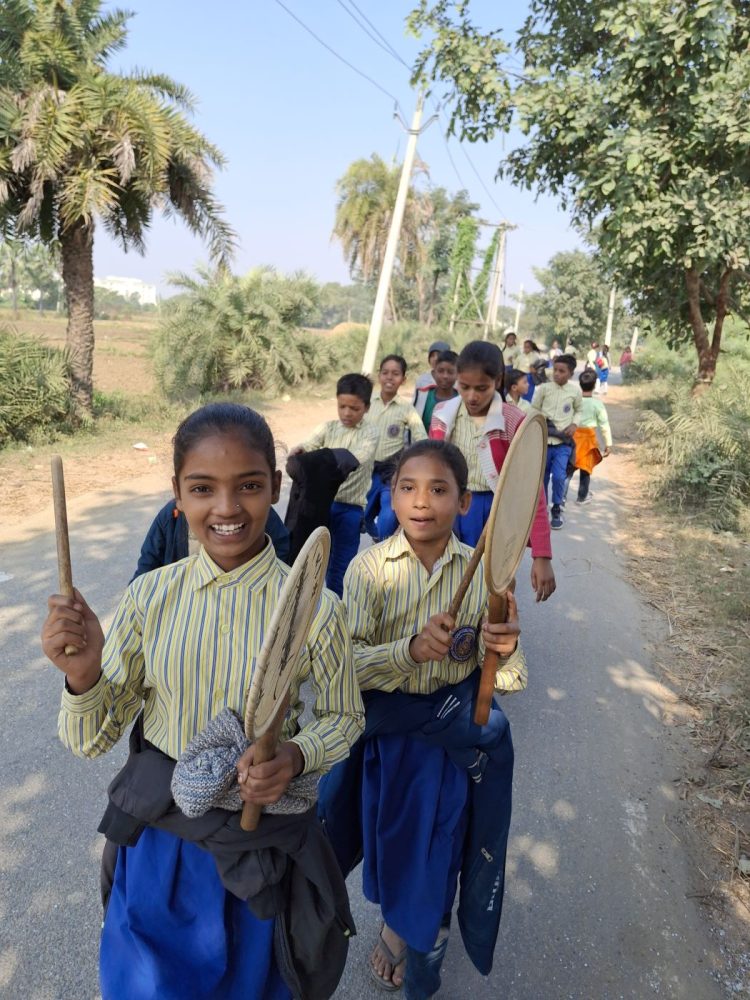
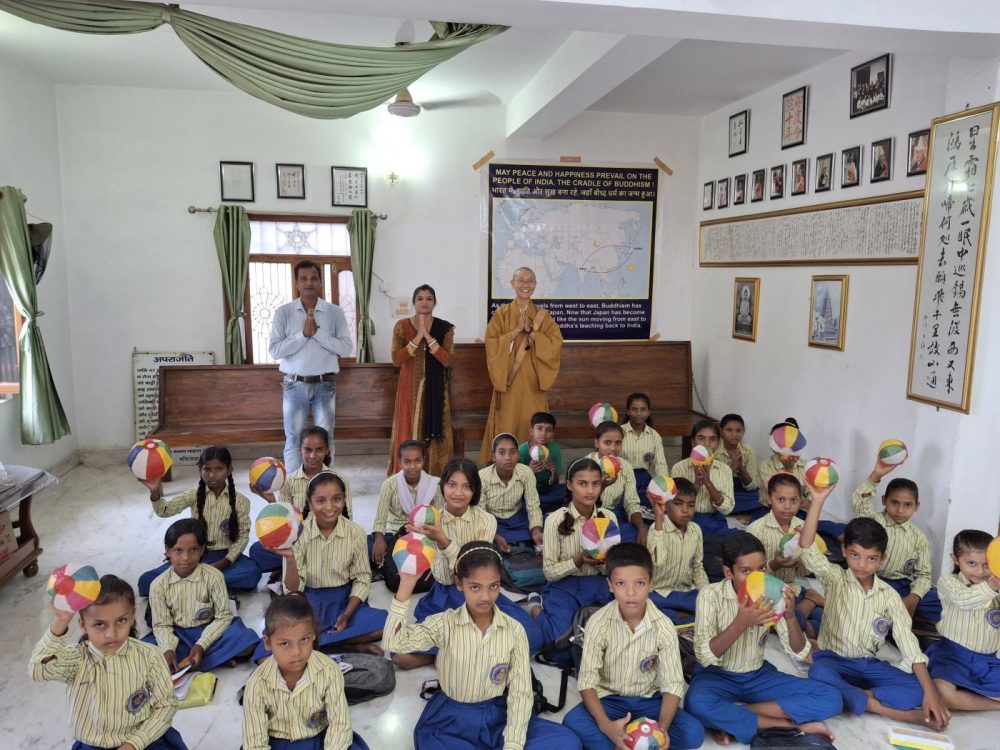
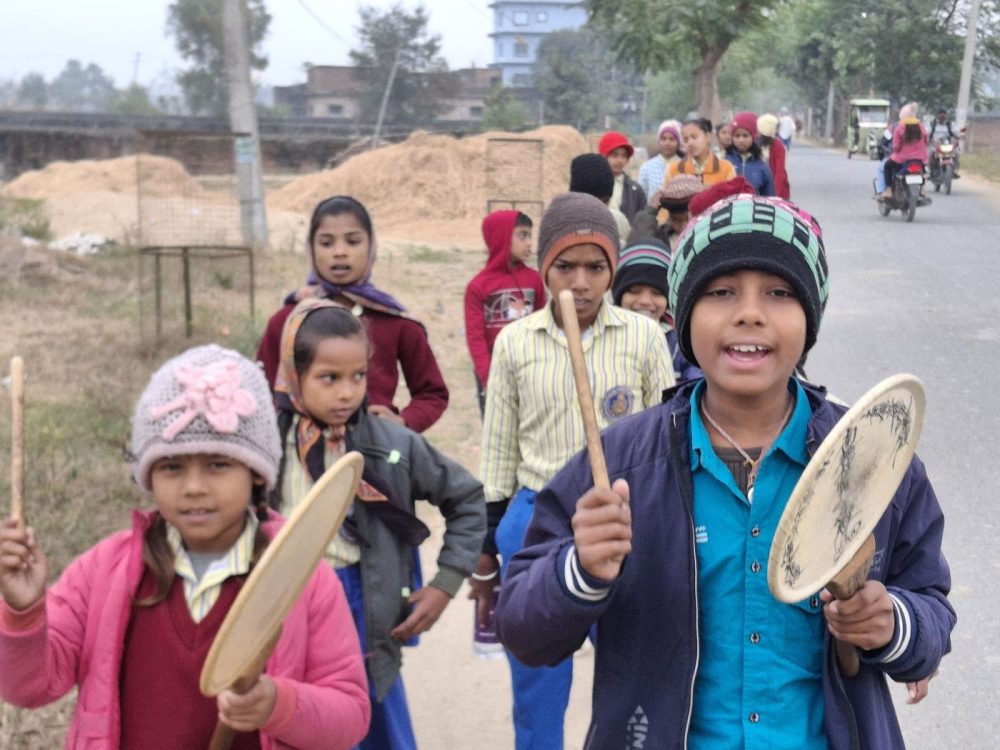
A. When the children in India looked at me and chanted the sutra, I was very happy to think that the sutra had become something familiar to them.
Q12. As a priest, what goals do you have for the future?
A. Spreading the Lotus Sutra in India
Q13. In what situations do you feel most rewarded?
A. When the local people are happy or show their gratitude. When I play the role of an intermediary and the local people receive the teachings of the Lotus Sutra.
Q14. Have you gained any insights through dialogue with other religions and cultures?
A. I have come to realize the importance of being open-minded and having faith in order to accept diversity.
Q15. What was the happiest moment in your life?
A. When I was needed or when I made someone happy.

Q Questions about personality
Q16. If you had to describe yourself in one word, how would you describe yourself?
A. Serious
Q17. How do you spend your days off or free time?
A. Resting
Q18. How do you relieve stress and pressure?
A. Exercise
Q19. How do you want to be seen by other people?
A. A considerate person
Q20. What does “happiness” mean to you?
A. Making people smile
Q. About your aspirations and vision
Q21. What dreams or wishes do you want to achieve in your life?
A. Spreading the Lotus Sutra in India
Q22. How do you think Buddhism can contribute to society and communities?
A. It can be an indicator for the development and improvement of society and communities
Q23. What message would you like to give to children of the future?
A. I want everyone to respect each other and live their lives with care, because we are all equal and have potential, not divided by caste.
Q24. What kind of influence would you like to have on other priests and your peers?
A. I want to have a relationship where we can give each other good stimulation and improve each other through mutual encouragement and competition.
Q25. Finally, looking back on your own life and activities, what is the most important thing you want to tell yourself now?
A. You have a stubborn personality, so you should try to be more flexible and open-minded in your activities.
Q Questions about your activities in general
Q26. What do you value most in your daily activities?
A. A bright smile that makes it easier for people to approach you, and consideration for other people’s situations
Q27. Please tell us about a moving episode from a study session with students.
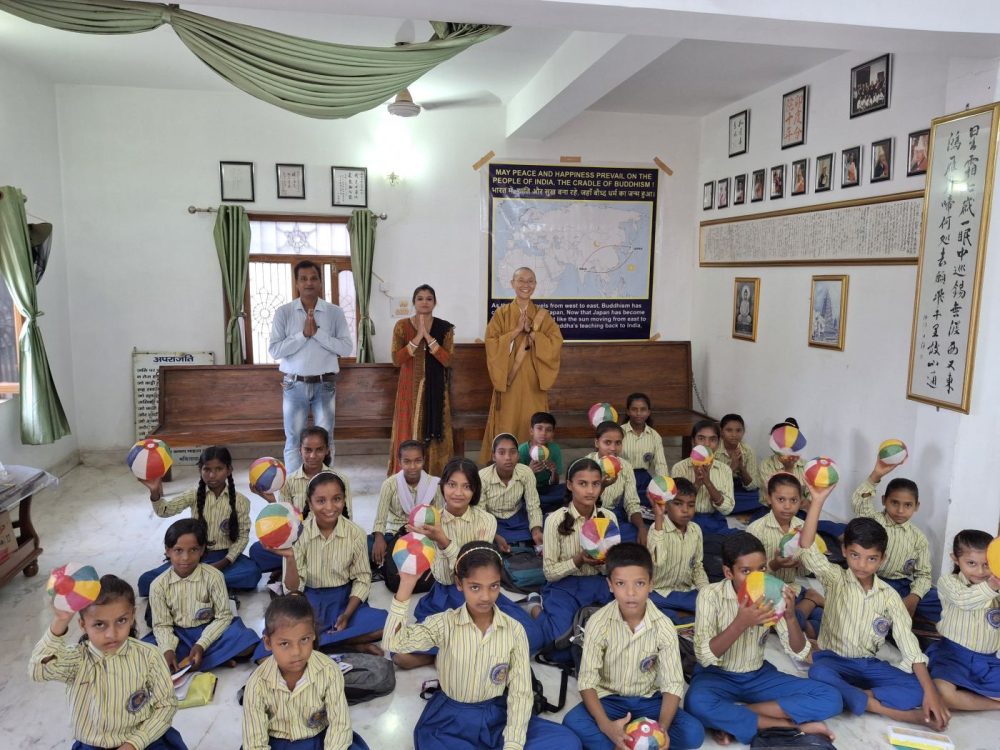
A. There is a culture of celebrating Teachers’ Day, and they prepared a surprise gift of a Buddha statue for me during class. When I invited the children to a ceremony, they surprised me by performing a dance and giving a speech, and they also drew pictures of temples, Buddha, and my face on construction paper and gave them to me as gifts.
Q28. How is harmony with the local culture achieved in the propagation of Buddhism in India?
A. Buddhism is a minority religion, but I think it is in harmony with the local culture because Buddha is considered to be an incarnation of Vishnu.
Q29. What do you think about the impact you have on the students as you continue to hold weekly study sessions?
A. I believe that by absorbing the sutras with your own skin and chanting them with your own mouth, small acts of virtue will accumulate and have a positive impact in the future.
Q30. What kind of message do you want to convey through your meal support activities?
A. The message of equality, that everyone can eat together at the same table (in the caste system, people of different castes are not allowed to eat together)
Q. Questions about your relationship with the students

Q31. What questions or reactions from the students have made an impression on you?
A. “Where is Nichiren Shonin’s hometown?”
Q32. What do you do to stimulate the students’ interest in Buddhism?
A. I use easy-to-understand picture books.
Q33. Do you have any specific examples of how the students are putting Buddhist teachings into practice in their daily lives?
A. I don’t know yet, because of the physical distance between the temple and the students’ villages, I don’t know what the students’ daily lives are like.
34. What do you expect from the students as future Buddhists?
A. Here in rural India, I can feel the deep-rooted existence of the caste system, but I want people to value the teachings of equality and not discriminate against people based on their status, and to believe in their own potential.
35. What did you learn through your activities in the children’s village?
A. I learned the importance of believing in your potential and taking action, rather than making snap judgments based on a narrow perspective and your own limited experience. I was also inspired by the children’s openness to new things and their youthful energy, and I hope to emulate them.
Q. Questions about the event
Q36. What is the most important thing you want to convey to the participants through this annual event?
A. To live each day with a heart of gratitude, joining our hands to the gods and buddhas that we cannot see with our own eyes. I would be happy if the children could grow up and come to believe in the Lotus Sutra together.
Q37. Please tell us about the special meaning and traditions of each event.
A. We use picture cards to teach people about the birth and enlightenment of Buddha, and we also hold events to introduce the hanging dolls and Hina dolls that the master has prepared to help local people become more interested in the temple (Hina Matsuri service), and we also fly carp streamers to help the children grow up healthy and strong. We also hold a memorial service for ancestors during the two-week period of the Hindu tradition of ancestor worship once a year, and we do this with the idea that it will be easier for local people to visit the branch temple.
Q38. What were your thoughts on the participation of the priest from Japan?
A. Last year, the priest requested that the children recite the “Threefold Refuge” at the beginning of the ceremony and that lotus flowers be offered during the ceremony. Thanks to this, I think that this year’s ceremony was more closely connected to the local people, and the priest also said that it was great that around 20 Indian children attended.
Q39. How are the local people involved in the ceremony?
A. They helped with the preparations, and on the day of the ceremony, they helped distribute the rice porridge to about 100 villagers.
Q40. Are there any words of feedback from the participants that particularly stand out?
A. “There are many differences between India and Japan, such as the way events are held and the dates, but I am grateful for the chance to be exposed to a new culture.”
Q Questions about the Hokekyo Study Group
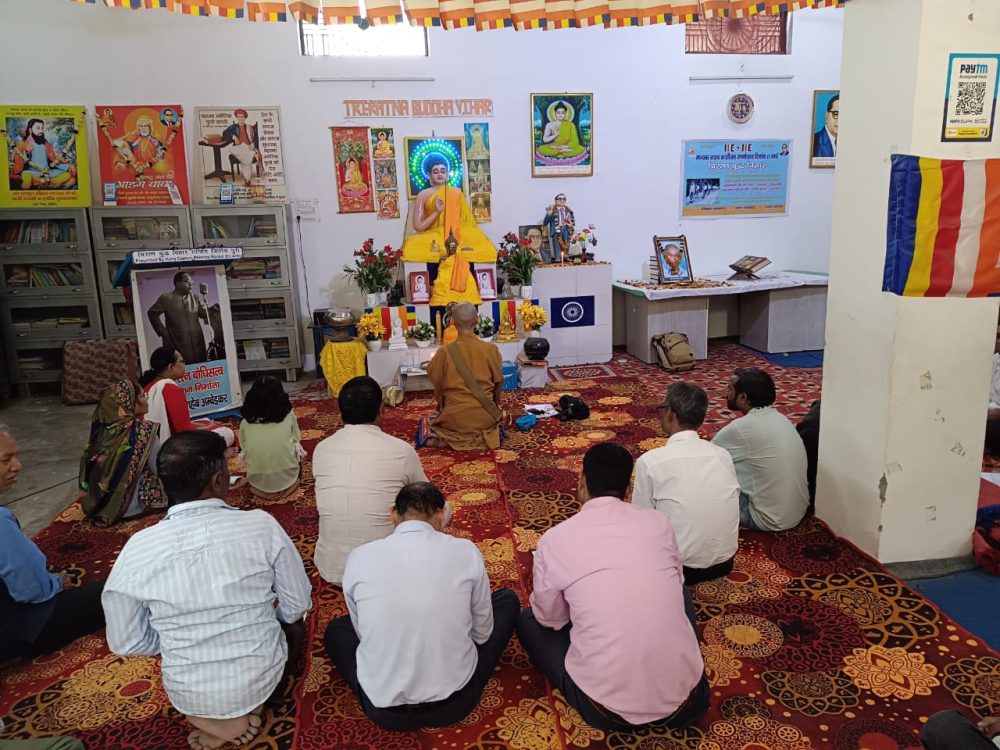
Q41. What was the reason for starting the Hokekyo study group in Delhi?
A. I was introduced to it by a Buddhist acquaintance in Delhi, and I thought I would like to do some propagation work for the Buddhist community.
Q42. What did you learn from interacting with the local Buddhists?
A. I’ve noticed that many people deeply revere Dr. Ambedkar. I also realized that many people wish to meditate to calm their minds.
Q43. Please talk about the impact of the Lotus Sutra teachings on the participants.
A. I believe that when everyone can truly believe in and practice the Lotus Sutra’s teaching that all people possess the potential to become Buddha, they can experience peace of mind and realize true happiness.
Q44. Do you feel that the participants’ attitudes and awareness have changed through the Lotus Sutra study group?
A. In Delhi, there are many elderly adults, so in the first year, many people were hesitant to chant the sutra. I feel that there are still many people who are hesitant or who find it hard to believe, but the female leader, who had a stern expression on her face, is now able to chant the sutra out loud, and some people have said that listening to the sound of the sutra helps them to concentrate on meditation, so I was surprised by the gap between the beginning and now, and I realized that it is important to continue with small, steady steps.
Q45. What benefits have you experienced from using the regional grant?
A. India is a large country, so even if we are asked to come and give a talk, it is difficult to pay our own travel expenses, so we are very grateful for this.
Q. Questions about social activities

Q46. What was the impetus for starting to provide meals to the poor?
A. A proposal from a member of the temple’s local corporation, “Trust”.
Q47. What kind of connection with the local community do you feel through the meal support?
A. It was pointed out that, as a custom and culture in India, religious facilities have the role of providing meals to worshippers as prasad, so I think that this activity will lead to the local people recognizing the branch temple if it becomes established. Also, the users are not just from the neighboring villages, but also from places that are a little further away, and they look forward to coming every week, so I feel that the awareness of the activity is very different in the first year and the second year.
Q48. How do you convey the Buddhist message to people when you distribute Prasad?
A. Through our activities, we want to convey the spirit of equality, where everyone can eat together, which is important for human life.
Q49. Please tell us about the volunteers who participate in the meal support activities.
A. When we are short of hands, our neighbors help out.
Q50. Please tell us about your outlook for the meal support activities in the future.
A. We will continue as long as we can, and I hope that the spirit of service will spread, and that everyone will help each other. We eat with our hands here, but it’s not very hygienic, so I’d like to gradually improve things by asking people to wash their hands before meals, keeping their sandals tidy and lined up at the entrance, and using tables instead of the floor.
Q Questions about Buddhism

Q51. What are your thoughts on the universal value of the teachings of Buddha?
A. The Lotus Sutra, which is based on a deep understanding of human psychology and which is also designed to be relevant to our modern times, is a perfect guide for us in this age of natural disasters and war.
Q52. Could you tell us about when and why you started studying Buddhism?
A. I started to study and research Buddhism in earnest after joining the Indian Philosophy Department at university. My teacher advised me to study the Lotus Sutra in Sanskrit, the language in which it was originally written, so I did research at university, graduate school and research institutes.
Q53. How do you think you can convey the teachings of Buddhism to people today?
A. First of all, I try to convey the teachings of Buddhism to the people around me by answering the questions of those who visit the temple or who express an interest in Buddhism. However, I think that people around me are influenced by the way I live and behave in accordance with the teachings of Buddhism, so I am learning in India the importance of conveying the teachings not through words but through actions.
Q54. What do you think is the most important thing in future missionary activities?
A. I think that if people see your faith and the way you express it in your actions and behavior, and if it is genuine, they will be attracted to it and it will lead to propagation. I feel that it is important for me to embody the spirit of Buddhism myself.
Q55. Finally, please tell us your thoughts and wishes regarding Buddhism.
A. In recent years, there have been many natural disasters and man-made disasters, and I think that in order to achieve world peace, we need the spirit of Buddhism, which is based on the principles of “middle way”, “equality”, “self-reflection” and “altruism”. I want to spread this spirit through propagation.